












How to Carry a Golf Bag Properly
Posted by Tayte Andruss on Apr 10th 2026
Learning how to carry a golf bag properly is one of the first skills every new golfer should develop before stepping onto the course. Whether you are playing your first round or getting back into the game after some time away, the way you carry your bag has a direct impact on your comfort, energy levels, and long-term physical health. A poorly carried bag leads to muscle fatigue, back strain, and an off-balance swing by the back nine. The good news is that with the right bag, the right setup, and a few practical habits, you can carry your golf clubs comfortably across 18 holes without wearing yourself out.
This guide from Embers Golf walks you through everything you need to know, from choosing the best golf bag for your body and game to organizing it correctly, using proper lifting technique, and handling different weather conditions on the course. By the time you finish reading, you will know exactly how to carry a golf bag with confidence and comfort.
Exploring the Different Types of Golf Bags
Before you can master how to carry a golf bag, you need to start with the right bag for your needs. Not all golf bags are built the same. The two most common types you will encounter are stand bags and cart bags, and each serves a different purpose on the course.
Golf Stand Bags
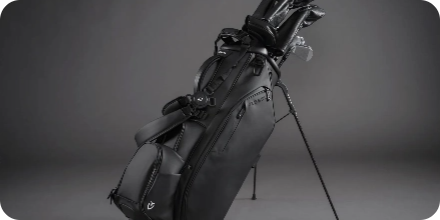
Golf stand bags are built for golfers who prefer to walk the course. They come equipped with a built-in kickstand mechanism that props the bag upright whenever you set it down, keeping your clubs organized and your bag off the wet ground. Stand bags are typically lighter than cart bags, usually weighing between 3 and 5 pounds when empty, which makes them the go-to choice for carry golfers.
Most stand bags come with a dual strap system that distributes the bag's weight across both shoulders, which makes a significant difference over the course of a full round. If you are serious about walking and carrying, a well-fitted stand bag is your best friend on the course. Browse our selection of golf stand bags to find the right fit for your game.
Golf Cart Bags
Golf cart bags are designed primarily to sit on a motorized cart or push trolley. They tend to be heavier and roomier than stand bags, with more pockets and storage compartments for gear, snacks, rangefinders, and accessories. If you know how to carry a golf cart bag when necessary, it can be done, but these bags are not optimized for extended carrying.
Cart bags typically have a single strap or no strap system at all, making them less comfortable for long walks. If you regularly ride in a cart or use a push trolley, a cart bag gives you more storage flexibility. However, if walking is your style, stick to a stand bag. Check out our range of golf cart bags for premium options built for cart riders.
How to Choose the Right Golf Bag for Your Game
Picking the right golf bag before you worry about carry technique is just as important as learning proper form. The wrong bag will make even the best carrying technique feel uncomfortable. Here are four key factors to weigh before buying.
Weight Considerations
The lighter your bag, the less strain on your body over 18 holes. A good carry stand bag should weigh no more than 4 to 5 pounds when empty. Add your clubs, balls, water, and accessories, and you are often looking at 25 to 35 pounds total. Every unnecessary pound adds up by the 15th hole, so choose a bag made from lightweight materials like nylon or reinforced polyester and avoid overpacking pockets with items you will not use during a round.
Strap Systems
Golf carry bag straps are one of the most important features to evaluate when buying a carry bag. Look for padded, adjustable dual straps that allow you to balance weight evenly across both shoulders. Single-strap bags can work in a pinch but tend to cause uneven muscle fatigue and shoulder soreness. A good dual-strap system with a chest or sternum strap keeps the bag stable and close to your back, which reduces the energy you spend stabilizing the load while walking.
Storage Needs
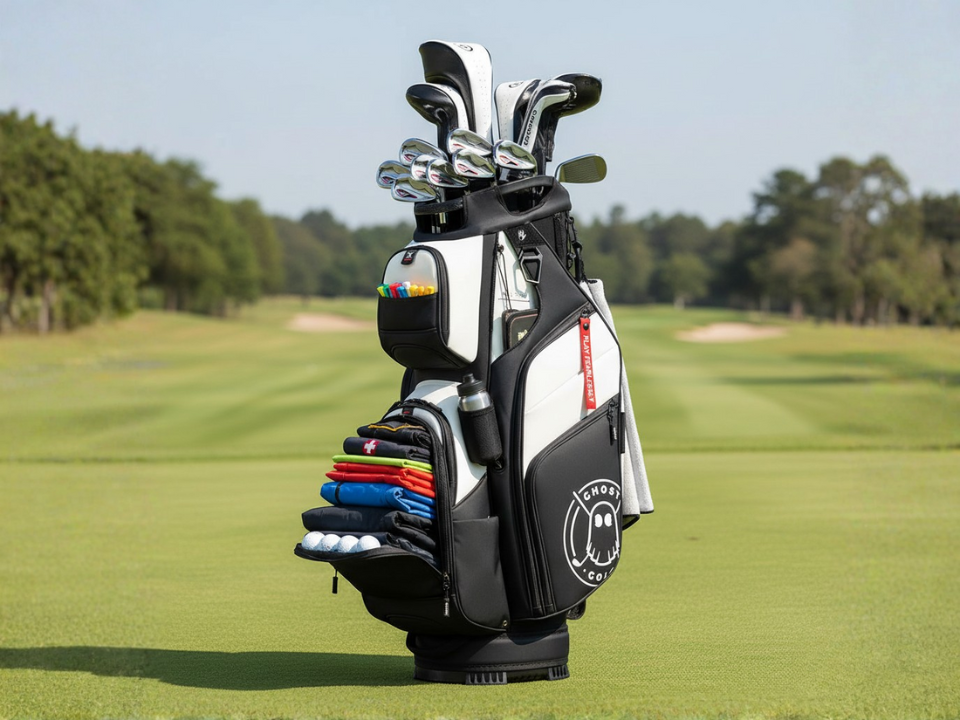
Think about what you actually bring to the course. A carry bag does not need to be enormous, but it should have enough pockets for your essentials: balls, tees, a rangefinder, a glove, your phone, snacks, and a rain jacket. Look for a bag with an insulated water bottle pocket and a valuables pocket with a water-resistant lining. Avoid the temptation to buy the biggest bag available just because it has more storage. More pockets mean more temptation to pack heavier.
Personal Preferences
Your bag is an extension of your game, so personal fit matters. Consider the number of club dividers you want (14-way top dividers make individual club access fast), the color and style that appeals to you, and whether you prefer a bag with a kickstand or one without. If you are tall or have a long torso, look for bags with longer strap adjustability to position the bag correctly on your back. If you are shorter or carry a lighter load, a more compact bag may suit you better.
How to Properly Prepare Your Golf Bag for Carry
Preparation before you leave the parking lot can make a noticeable difference in how comfortable your round feels. A disorganized bag shifts weight unevenly and forces you to dig around for clubs mid-round, which interrupts your rhythm and wastes energy.
Organizing Your Bag Efficiently
Follow this simple club organization system for a balanced, easy-access setup:
- Top section (furthest from you): Woods and driver. These are your longest clubs and heaviest heads, so placing them at the top keeps the center of gravity low and stable on your back.
- Middle section: Irons in descending order from long irons to short irons.
- Bottom section (closest to you): Wedges and your putter. These are your shortest clubs and easiest to reach.
Pack heavier accessories like water bottles and rain gear close to your back in the main compartment to keep the load centered and reduce pull on your shoulders.
Adjusting the Straps for a Perfect Fit
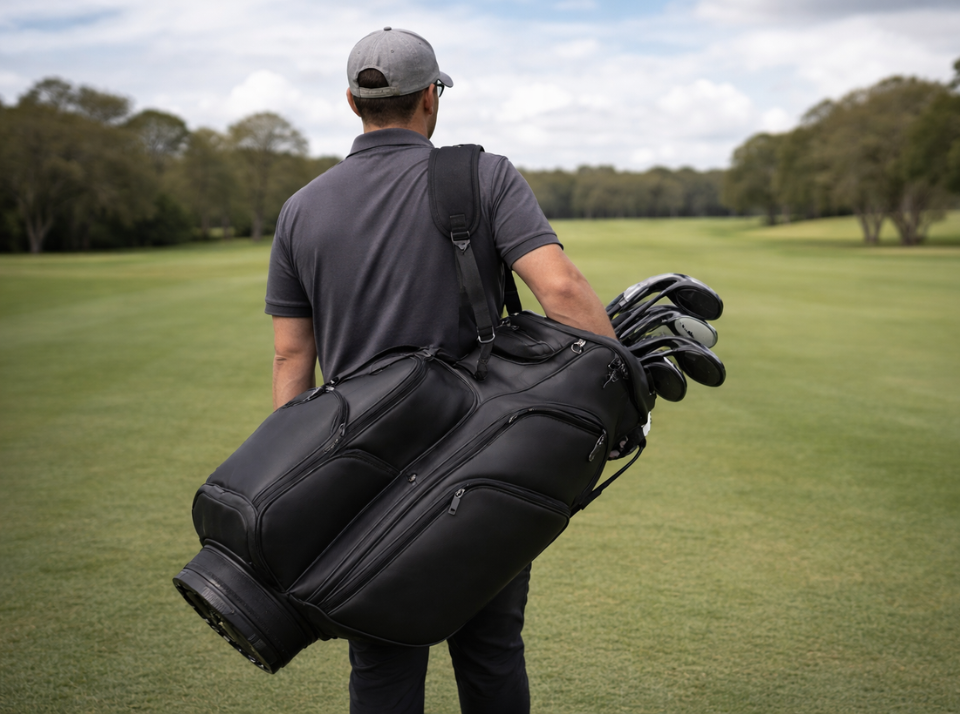
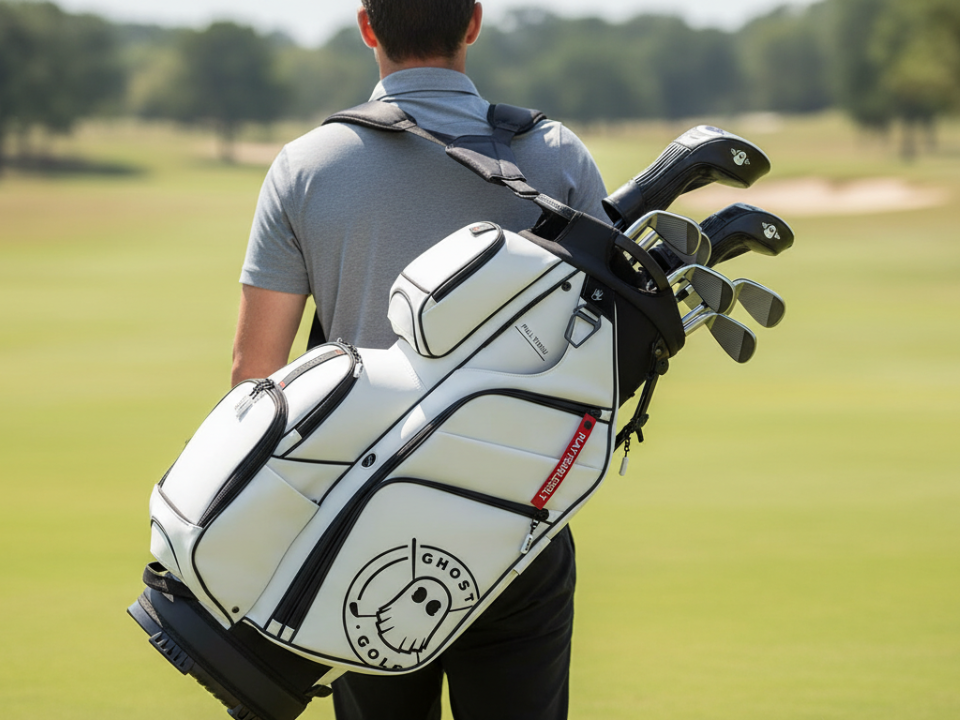
Before you even pick up your bag, take a few minutes to dial in the strap length. Your bag should sit high on your back with the bottom of the bag resting at your hip level, not hanging down near your waist. The top of the bag should not reach above your shoulders. Tighten the straps so the bag stays snug against your back without restricting your arm swing. If your bag has a sternum strap, clip it across your chest to keep the shoulder straps from slipping outward during your walk.
Golf Bag Preparation Checklist
Before heading to the first tee, run through this quick checklist:
- Clubs organized by length (woods at top, putter at bottom)
- Bag weight under 30 pounds total
- Both shoulder straps are adjusted evenly
- The sternum strap is clipped and comfortable
- Water bottle filled and in the insulated pocket
- Rain gear packed in an accessible pocket
- Valuables pocket closed and secured
- All zipper pockets are closed before lifting
Correct Carrying Techniques for Maximum Comfort
Once your bag is properly set up, how you carry golf clubs during the round determines how fresh your body feels from the first tee to the 18th green. There are two primary carrying methods used by golfers, and knowing when and how to use each one is key.
Double Strap Method
Knowing how to carry a golf bag with two straps is the most body-friendly method for walking golfers. Here is how to do it correctly:
- Stand beside your bag on the ground. Slip your dominant arm through one strap.
- Swing the bag around your back and slip your other arm through the second strap.
- Stand upright and adjust both straps so the bag sits high on your back.
- Engage your core slightly as you walk to support the load.
- Keep your posture straight. Do not lean forward or arch your lower back.
- When stopping, use the kickstand before releasing the bag.
Knowing how to carry a golf bag with two straps correctly is how most touring professionals and seasoned walkers carry their bags during practice rounds. The load splits evenly, your spine stays aligned, and you conserve far more energy compared to single-strap carrying.
Single Strap Method
If your bag only has one strap or you prefer to use a single-strap golf bag for a shorter carry, here is how to carry a golf bag with one strap without straining your body. The key is to switch shoulders regularly to avoid overloading one side:
- Thread the single strap over one shoulder so the bag rests diagonally across your back.
- Position the bag so the weight rests on your hip rather than pulling on your shoulder joint.
- Switch the strap to the opposite shoulder every 3 to 4 holes.
- Stand tall and resist the urge to lean away from the bag to compensate for the weight.
- If the strap has a pad, make sure it sits directly over the shoulder muscle, not the collarbone.
Learning how to carry a single-strap golf bag correctly reduces the risk of postural imbalance during your round. For longer rounds, switching shoulders is not optional. It is a habit that protects your lower back and keeps your body symmetrical going into your swings.
Essential Tips for Lifting and Walking with Your Golf Bag
Proper lifting technique is often overlooked, but it is one of the most important parts of how to hold a golf bag safely:
- Always bend your knees when picking up your bag. Never bend at the waist with straight legs.
- Grip the strap or handle close to your body before lifting.
- Lift with your legs, not your back.
- Avoid twisting your torso as you lift or set the bag down.
- Take regular rest breaks on benches between holes to give your shoulders and back a break.
- Stay hydrated. Fatigue increases the risk of poor posture and muscle strain.
Common Mistakes to Avoid When Carrying a Golf Bag
Even experienced golfers fall into bad habits on the course. Avoid these common carrying mistakes to protect your body and your game:
- Overpacking the bag: Every extra pound you carry multiplies over the course of a round. Pack only what you need for 18 holes.
- Never switching shoulders on a single strap: Using the same shoulder all around creates muscular imbalances and shoulder soreness that can linger for days.
- Wearing the bag too low: A bag that hangs low pulls on your lower back. Tighten your straps so the bag sits high.
- Leaning forward under the load: This compresses the lumbar spine. Walk tall and engage your core.
- Skipping strap adjustments: Straps that are too loose allow the bag to bounce and shift, wasting energy.
- Lifting the bag by a club shaft: This can damage your clubs and strain your wrist. Always use the handle or strap.
- Ignoring early signs of fatigue or pain: If your back or shoulder starts to ache mid-round, slow down, adjust your strap position, and take a short rest.
Must-Have Accessories to Improve Golf Bag Carrying Comfort
A few smart accessories can transform how comfortable your carrying experience feels, especially during longer rounds:
- Strap pad covers: Extra-thick foam covers that attach over your existing straps for added cushioning on long walks.
- Golf towel: Clip one to your bag handle for quick club cleaning and sweat management on hot days.
- Rangefinder holder: A clip-on holder keeps your rangefinder accessible without adding bulk to a pocket.
- Insulated water bottle: Staying hydrated reduces fatigue. A double-walled insulated bottle keeps drinks cold for your full round.
- Lightweight rain cover: A pack-flat rain cover adds almost no weight but protects your bag and clubs in wet conditions.
- Golf umbrella: If your bag has an umbrella holder, a lightweight golf umbrella provides shade and rain cover on the course.
- Bag rain poncho: Purpose-built bag ponchos zip over the entire bag and weigh almost nothing when packed.
How to Properly Care for Your Golf Bag
Your golf bag takes a beating over the course of a season. A little regular maintenance keeps it performing well and extends its lifespan considerably:
- Wipe down the exterior after wet rounds with a damp cloth and allow it to air dry fully before storing.
- Check zippers regularly and apply a zipper lubricant if any starts sticking or dragging.
- Inspect the kickstand mechanism every few rounds. Tighten any screws that may have loosened from repeated use.
- Clean the interior pockets periodically by turning them inside out and shaking out debris.
- Store your bag in a cool, dry place away from direct sunlight to prevent fading and material degradation.
- Avoid placing your bag flat on its side for extended periods, as this can deform the structure of the bag.
- Check straps and strap attachment points for wear, fraying, or loose stitching before each round.
A well-maintained golf bag from a reputable golf store will last many seasons when given basic care and attention after each round.
How to Carry a Golf Bag in Any Weather Condition
Weather affects not only your game but also how comfortable carrying your bag feels. Here is how to adapt your carrying approach to the most common course conditions.
Hot Weather
Heat and humidity make carrying feel significantly harder than it does on a mild day. Wear moisture-wicking clothing to reduce sweat buildup under your straps. Keep your bag as light as possible by leaving anything non-essential in the car. Take extra breaks in the shade between holes and drink water consistently throughout the round. Avoid wearing the bag during tee box waits. Set it down using the kickstand and rest your shoulders whenever you can.
Cold Weather
Cold weather rounds require extra layers, which can affect how your straps fit. After putting on your jacket and base layers, re-adjust your strap lengths so the bag still sits high on your back and fits snugly. Cold muscles are more prone to strain, so take a few extra minutes warming up before the round and move your shoulders gently between holes. Pack hand warmers in an accessible outer pocket so you can warm your hands quickly without digging through your bag.
Rainy Conditions
Rain makes both the bag and the ground more challenging to manage. Fit a rain cover over your bag to protect your clubs and gear. Wet straps lose grip and can slip, so check your strap positions and tighten them more than you would on a dry day. Use a golf umbrella when walking between shots to keep your grips dry. Watch your footing on wet grass and hillsides, as a heavy bag can throw off your balance on slippery terrain. After a wet round, remove your rain cover and dry the bag completely before storing it.
Special Carrying Tips for Seniors and Junior Golfers
Carrying a golf bag is not a one-size-fits-all activity. Age, body size, and physical condition all play a role in what is safe and comfortable for each golfer.
Tips for Senior Golfers
As the body ages, joints, muscles, and recovery time all change. Senior golfers who love to walk the course should take these extra precautions:
- Choose the lightest stand bag available, ideally under 4 pounds empty.
- Consider a 5-way or 6-way divider bag instead of a 14-way to reduce structural weight.
- Use a push trolley or electric trolley for longer rounds or hilly courses instead of carrying.
- If carrying, always use a dual-strap system to evenly distribute the load.
- Pack only what is strictly necessary for the round to minimize total weight.
- Listen to your body. If your back or hips begin to ache, switch to a push trolley for the remaining holes.
- Invest in a bag with wide, padded straps that reduce pressure on aging shoulder joints.
Tips for Junior Golfers
Young golfers are still developing physically, so it is worth taking a careful approach to bag carrying from an early age:
- Use a junior-sized golf bag that is scaled to their height and carry capacity.
- Limit the number of clubs to 7 to 9 clubs for young players to reduce bag weight.
- Teach proper dual-strap carrying technique from the very first round.
- Have juniors carry only for 9 holes until they build up enough strength and endurance for a full 18.
- Check the bag fit regularly as junior golfers grow. Strap lengths need adjusting as they get taller.
- Encourage rest breaks between holes and monitor for signs of fatigue or discomfort.
Final Takeaway
Carrying your golf bag properly is one of those fundamentals that pays dividends every single round. When you know how to carry your golf bag with the right technique, a well-fitted bag, and good preparation habits, you arrive at the 18th green feeling far fresher than golfers who have been fighting their equipment all day. Your swing stays consistent, your energy stays up, and your enjoyment of the game goes up significantly.
Start with the right golf bag for your game, set it up correctly before each round, dial in your strap fit, and build the habit of proper lifting and posture on the course. Whether you are walking 9 holes after work or playing a full competitive round on the weekend, these habits will keep your body healthy and your game strong for years to come.
Frequently Asked Questions
What Is the Easiest Way to Carry a Golf Bag?
Using a dual-strap stand bag is the easiest and most comfortable way to carry a golf bag for a full round. Adjust both straps so the bag sits high on your back with the bottom resting at hip height. A snug fit against your back reduces swaying and distributes the weight evenly across both shoulders, which dramatically reduces fatigue compared to carrying on one side.
How to Carry a Golf Bag on a Motorcycle?
Carrying a full golf bag on a motorcycle is not recommended and is generally unsafe. The bag is too wide and unbalanced for safe motorcycle transport. If you need to transport clubs to a course, use a hard travel case or a soft travel bag secured in a car or truck. If a motorcycle is your only transport option, disassemble and pack the clubs in a dedicated tube or trunk bag specifically designed for motorcycle use.
Are Golf Bags Allowed for Free on Airlines?
No, most airlines do not allow golf bags as free checked baggage. Golf bags are typically treated as oversized or sports equipment and incur an additional fee that varies by airline, usually between $30 and $150 each way. Some airlines do allow golf bags within the standard checked baggage weight limit if you are already checking a bag, but you should always check the specific airline's sports equipment policy before your trip to avoid surprise charges at the counter.
What Is the Average Weight of a Golf Bag?
The weight varies significantly depending on bag type. An empty stand bag typically weighs 3 to 5 pounds, while a cart bag can weigh 5 to 8 pounds empty. When fully loaded with 14 clubs, balls, water, and accessories, a carry setup commonly lands between 25 and 35 pounds total. Keeping your total packed weight under 30 pounds is a good benchmark for comfortable walking and carrying.
Can Carrying a Golf Bag Hurt Your Back?
Yes, carrying a golf bag can hurt your back if you use poor posture, carry with a single strap for the entire round without switching sides, or overfill your bag with unnecessary weight. Using a properly fitted dual-strap stand bag, lifting correctly with your knees bent, and maintaining upright posture throughout the round significantly reduces the risk of back discomfort or injury.
Is a Push Cart Better Than Carrying a Golf Bag?
Yes, a push cart is generally easier on your body than carrying a golf bag, particularly for longer rounds, hilly courses, or golfers with pre-existing back or shoulder conditions. A push cart removes the weight from your body entirely and lets you walk freely. However, carrying your bag with proper technique is a completely viable and healthy option for most golfers, and many prefer it for the simplicity and feel of having their clubs on their back.
Have more questions on Golf Bags? Contact our expert team at info@embersgolf.com or call us at 303-800-5659, and our expert support team will help you find the right Golf Bag.